
Inside Zone Blocking Rules: A Comprehensive Guide
Inside zone blocking is a prevalent scheme in football due to its effectiveness and simplicity. It streamlines assignments for linemen‚ making it easily taught and applied across various plays.
Inside zone blocking represents a foundational element in modern offensive football‚ gaining widespread adoption across all levels of the game. Its core appeal lies in its inherent simplicity and adaptability‚ offering a versatile approach to run blocking. This scheme fundamentally aims to create running lanes by moving defenders laterally‚ rather than directly engaging and overpowering them;
The beauty of inside zone lies in its reliance on collective movement and coordinated steps. Offensive linemen work in unison‚ executing zone steps to influence defenders and open pathways for the running back. Unlike man-blocking schemes‚ where each lineman has a specific assignment‚ inside zone emphasizes area responsibility.
This approach simplifies assignments‚ making it easier for linemen to react to defensive movements and maintain leverage. The scheme’s effectiveness stems from its ability to consistently generate positive yardage and wear down opposing defenses over the course of a game. Understanding the principles of inside zone is crucial for both players and coaches seeking to maximize their offensive potential.
Core Principles of Inside Zone
The foundation of inside zone blocking rests upon several key principles. First‚ collective movement is paramount; linemen must operate as a cohesive unit‚ executing synchronized steps to influence the defensive front. Second‚ lateral displacement is the primary goal – moving defenders sideways to create running lanes‚ rather than attempting direct‚ head-on collisions.
Zone steps are crucial‚ dictating how linemen initially engage defenders. These steps prioritize gaining leverage and positioning the blocker to control the defender’s movement. Double teams are frequently employed‚ particularly on defensive tackles‚ to generate movement and create running paths.
Furthermore‚ communication is vital‚ ensuring all linemen are aware of their assignments and potential adjustments. Finally‚ the scheme emphasizes effort and finish; maintaining blocks through the whistle is essential for maximizing gains. Mastering these core principles is fundamental to successful inside zone execution‚ enabling offenses to consistently move the ball and control the line of scrimmage.
Understanding Defensive Fronts & Alignments
Successfully executing inside zone blocking requires a thorough understanding of opposing defensive alignments. Recognizing whether the defense presents an odd front (e.g.‚ 3-4) or an even front (e.g.‚ 4-3) dictates initial blocking assignments. Identifying key defenders – the nose tackle (1-technique)‚ defensive tackles (3-techniques)‚ and defensive ends (5-techniques) – is crucial for proper engagement.
Linemen must quickly assess the depth and width of the defensive line‚ as well as the positioning of linebackers. This assessment informs their zone steps and double-team targets. For instance‚ against a 3-4‚ the center and guard often double-team the nose tackle‚ while tackles handle the defensive ends.
Understanding defensive tendencies – whether a team favors stunts‚ blitzes‚ or specific gap attacks – allows for proactive adjustments to blocking schemes. Accurate pre-snap reads are paramount‚ enabling the offensive line to anticipate defensive movements and effectively control the line of scrimmage.

Key Blocking Assignments
Effective zone blocking hinges on precise assignments for each lineman‚ dictating who engages which defender and when‚ creating running lanes and pass protection.
Center Blocking Rules
The center’s role in inside zone is foundational‚ often tasked with double-teaming the playside one-technique with the playside guard (PSG). This initial double team aims to create movement and displace the defensive tackle‚ opening a lane. If the defensive tackle penetrates‚ the center must adjust and secure the A-gap.
On backside zone plays‚ the center is responsible for securing the backside linebacker‚ working in conjunction with the backside guard (BSG). The center’s path is typically a lateral step‚ aiming to cut off the linebacker and prevent penetration. Communication with the guard is crucial for a seamless double team or a smooth transition to linebacker control.
The center must also be prepared to adjust to defensive shifts and stunts‚ maintaining gap integrity and ensuring a clear path for the running back. Recognizing defensive alignments and reacting accordingly is paramount for successful inside zone execution. Proper footwork and hand placement are essential for winning leverage and controlling the defender.
Guard Blocking Rules (Playside & Backside)
The playside guard (PSG) typically engages in a double team with the center on the one-technique‚ driving to create a running lane. Upon releasing the double team‚ the PSG aims to secure the playside linebacker‚ working to “cut him off” and maintain the flow of the play. Footwork and angle are critical for effectively blocking the linebacker in space.
Conversely‚ the backside guard (BSG) often double-teams with the backside tackle (BST) on the three-technique. This aims to displace the defensive tackle and create a push. After the double team‚ the BSG is responsible for climbing to the playside linebacker‚ working in tandem with the center to control the second level.
Both guards must be adept at recognizing defensive alignments and adjusting their blocking assignments accordingly. Communication with the center and tackle is vital for seamless execution of double teams and linebacker control. Maintaining gap integrity and preventing defensive penetration are key responsibilities.
Tackle Blocking Rules (Playside & Backside)
The playside tackle (PST) generally engages the five-technique defensive end‚ aiming for a sustained double team with the guard. While often inconsequential for cutbacks‚ this double team focuses on creating movement and wearing down the defender through repeated collisions. The PST’s primary goal is to control the end and prevent penetration.
On the backside‚ the backside tackle (BST) collaborates with the BSG to double-team the three-technique. This combination aims to aggressively displace the defensive tackle‚ opening a lane for the running back. Following the double team‚ the BST must climb and work towards the playside linebacker‚ assisting the guard in controlling the second level.
Effective tackle play relies on proper footwork‚ leverage‚ and communication. Tackles must be able to adjust to different defensive alignments and maintain gap integrity‚ preventing defenders from disrupting the running lane. Consistent effort and technique are paramount.

Specific Defensive Line Techniques & Responses
Offensive success hinges on correctly identifying and responding to defensive line techniques like the 1‚ 3‚ and 5 techniques‚ utilizing strategic double teams and individual blocks.
Blocking the 1 Technique (Nose Tackle)
When facing a 1-technique‚ typically a nose tackle aligned directly across from the center‚ the initial focus is a double team. The center and playside guard collaboratively engage this defender‚ aiming to control his movement and create a running lane. This double team isn’t simply a two-man push; it’s about establishing leverage and driving the defender off the line of scrimmage.
The playside guard’s responsibility extends beyond the initial double team. As the play develops‚ the guard must work to “work off” the double team‚ transitioning to block a linebacker or continue driving the defensive tackle depending on their movement; The center’s role is to maintain the double team for as long as possible‚ ensuring the running back has a clear path.
Successfully neutralizing the 1-technique is crucial for inside zone success. A dominant double team can disrupt the defensive flow and open up significant running lanes‚ while a failed attempt can quickly lead to a disrupted play and a tackle for loss. Proper technique and communication between the center and guard are paramount.
Blocking the 3 Technique (Defensive Tackle)
The 3-technique‚ a defensive tackle aligned in the gap between the guard and center‚ presents a unique challenge in inside zone blocking. Often‚ this defender is quick and disruptive‚ requiring a coordinated effort to contain. The primary blocking assignment typically involves a double team initiated by the backside guard (BSG) and the center. This aims to control the 3-technique’s initial penetration and prevent him from disrupting the running lane.
However‚ unlike the 1-technique‚ the double team on the 3-technique is often designed to be shorter. The BSG is expected to “work off” the double team quickly‚ climbing to the linebacker level to secure the second level of the defense. The center continues to engage‚ aiming to maintain control and create movement.
Effective execution relies on timing and communication. The BSG’s ability to transition smoothly to the linebacker is vital‚ and the center must sustain the block long enough to allow the running back to gain momentum. Failing to control the 3-technique can quickly collapse the running lane.
Blocking the 5 Technique (Defensive End)
The 5-technique defensive end‚ aligned outside the tackle‚ is a key focus in inside zone schemes. Often‚ the initial assignment involves a one-on-one block by the playside tackle (PST). However‚ a common tactic is to utilize a double team‚ particularly when facing a strong or disruptive end. This double team typically involves the PST and the playside guard (PSG)‚ aiming to gain initial movement and control.
Interestingly‚ against a zone read play‚ movement on the 5-technique‚ even if the ball doesn’t go that direction‚ is valuable. Offensive line coaches like Coach Parker emphasize wearing down the defensive end through extra collisions. The double team isn’t necessarily about winning the block for the immediate run‚ but about creating fatigue and setting up opportunities later in the game.
The PSG’s subsequent movement is crucial; they often work to the linebacker level‚ while the PST continues to influence the defensive end’s path. Proper technique and sustained effort are paramount in neutralizing the 5-technique’s impact.

Advanced Zone Blocking Concepts
Advanced concepts include mastering double teams‚ reach blocks with precise timing‚ and strategically executing fan blocks based on defensive alignment and play design.
Double Teams: Execution & Targets
Double teams are foundational to successful inside zone blocking‚ particularly when confronting formidable defensive linemen. The core principle involves two offensive linemen engaging a single defender‚ aiming to create movement and displace them from their gap. Effective execution demands synchronized steps and a shared understanding of the target – often a 1 or 3 technique.
Typically‚ the center and playside guard will double the playside defensive tackle‚ while the backside guard and tackle collaborate on the backside defensive tackle. The initial aim is to gain control at the line of scrimmage‚ driving the defender laterally or vertically. Once the defender is sufficiently moved‚ one lineman will “finish” the block‚ continuing to drive‚ while the other ascends to the second level to engage a linebacker.
Coach Parker emphasizes that double teams on the five technique‚ while often inconsequential for cutbacks‚ contribute to wearing down the defensive end through extra collisions. This wear-down strategy is a key element of a successful inside zone scheme‚ creating opportunities later in the game.
Reach Blocks: Timing & Angles
Reach blocks are critical in inside zone schemes‚ enabling offensive linemen to get to the second level and secure linebackers. Successful execution hinges on precise timing and optimal angles of attack. Linemen must anticipate the defender’s movement and initiate their reach block at the correct moment‚ aiming to cut off the linebacker at the point of attack.
The initial step is crucial – a quick‚ decisive movement designed to gain leverage and position. The angle of the block is paramount; linemen must avoid getting squared up‚ instead aiming to arrive at the linebacker with their shoulders inside his frame. This allows for better control and the ability to drive him away from the play.
Proper footwork and maintaining a low pad level are essential for consistently executing reach blocks. Linemen must be athletic enough to cover the necessary distance and strong enough to sustain the block once engaged‚ opening running lanes for the ball carrier.
Fan Blocks: When & How to Execute
Fan blocks within the inside zone scheme are deployed when a defender is aligned outside the offensive lineman’s initial aiming point‚ typically a defensive end or linebacker flowing to the play. Unlike a drive block‚ the lineman doesn’t directly engage; instead‚ they “fan” – taking a wider angle to seal the defender outwards‚ away from the running lane.
The decision to fan block is often dictated by the defender’s leverage and pursuit angle. If the defender is attempting to penetrate inside‚ a fan block prevents him from collapsing the line and disrupting the play. Proper technique involves a quick‚ lateral step to establish the desired angle‚ followed by a sustained block to maintain the seal.
Effective fan blocking requires awareness and agility. Linemen must be able to read the defender’s movement and adjust their angle accordingly‚ ensuring they effectively cut off the pursuit and create a clear path for the running back.

Adjustments & Considerations

Successful zone blocking demands adapting to linebacker positioning‚ handling stunts‚ and recognizing front variations—odd or even—to protect cutbacks and wear down defenses.
Blocking Linebackers in Zone Schemes
Blocking linebackers within an inside zone scheme presents unique challenges‚ demanding a nuanced understanding of responsibilities; The playside guard and center often collaborate to influence the playside linebacker‚ particularly in a true zone approach. This requires coordinated movement and a commitment to working together to create running lanes. However‚ this strategy necessitates leaving the backside linebacker potentially unblocked‚ a calculated risk based on offensive system philosophy.
Coaches must determine if prioritizing the playside linebacker is beneficial‚ accepting the possibility of a backside pursuit. Alternatively‚ adjustments can be made to assign linebacker responsibilities to other linemen‚ depending on the defensive alignment and personnel. The key is to consistently identify linebacker flow and react accordingly‚ ensuring the running back has a clear path to exploit. Effective communication and precise execution are paramount when navigating these linebacker-focused blocking assignments.
Handling Stunts & Blitzes
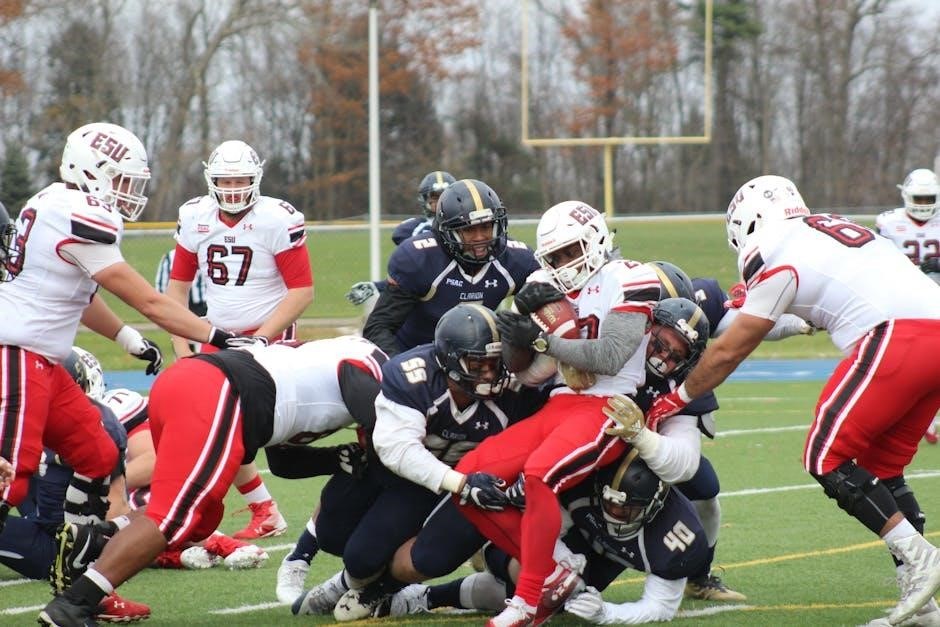
Inside zone blocking schemes require diligent preparation for defensive stunts and blitzes‚ demanding quick recognition and adaptable responses from the offensive line. When facing a stunt‚ linemen must prioritize “pass-off” techniques‚ seamlessly transitioning responsibilities to maintain blocking integrity. Identifying the stunt’s trajectory early is crucial‚ allowing for timely adjustments and preventing defensive penetration.
Blitz pickups necessitate a collective effort‚ often involving a combination of slide protection and individual assignments. The center and guards frequently shoulder the responsibility of absorbing interior pressure‚ while tackles focus on containing edge rushers. Communication becomes paramount‚ ensuring each lineman understands their role and can react decisively. Successfully neutralizing stunts and blitzes relies on disciplined technique‚ rapid adjustments‚ and a unified front‚ protecting the quarterback and opening running lanes.
Adjusting to Odd vs. Even Fronts
Adapting inside zone blocking to odd and even defensive fronts is fundamental to offensive success. Even fronts‚ typically featuring two down linemen‚ allow for more straightforward double-team opportunities‚ often targeting the defensive tackles. Linemen can readily execute reach blocks and create running lanes with consistent movement.
Odd fronts‚ characterized by a nose tackle and three defensive linemen‚ present unique challenges. Double teams often shift to the nose tackle and a defensive end‚ requiring precise angles and coordinated efforts. The backside guard and center frequently work together on the nose‚ while tackles focus on containing the defensive ends. Recognizing the defensive alignment pre-snap is vital‚ enabling the offensive line to adjust blocking schemes and exploit vulnerabilities‚ maximizing running efficiency against any front.
Cutback Protection in Inside Zone
Cutback protection within the inside zone scheme is crucial for exploiting defensive over-pursuit and creating explosive running plays. It relies heavily on the offensive line’s ability to influence defenders towards the play’s initial direction‚ creating space for the running back to redirect.
Linemen must maintain their initial blocking angles‚ driving defenders upfield to open cutback lanes. The backside tackle and guard are particularly important‚ sealing off defenders and preventing penetration. The running back reads the defensive flow‚ identifying opportunities to cut against the grain. Successful cutback protection demands disciplined blocking‚ quick recognition‚ and a synchronized effort between the offensive line and the running back‚ turning potential losses into significant gains.
Wear Down Strategy with Double Teams
A core tenet of inside zone blocking is utilizing double teams to physically wear down the defensive front‚ creating running lanes as the game progresses. These combinations‚ often involving the center and guard or guard and tackle‚ aim to move defenders off the line of scrimmage and disrupt their leverage.
The goal isn’t always an immediate push for yards on every play; it’s about consistently creating collisions and exhausting defenders. Even if the double team doesn’t result in a significant gain initially‚ the sustained effort contributes to fatigue. As defenders tire‚ their technique deteriorates‚ and running lanes become more accessible later in the game. This methodical approach‚ combined with consistent execution‚ is a key component of a successful inside zone running attack.